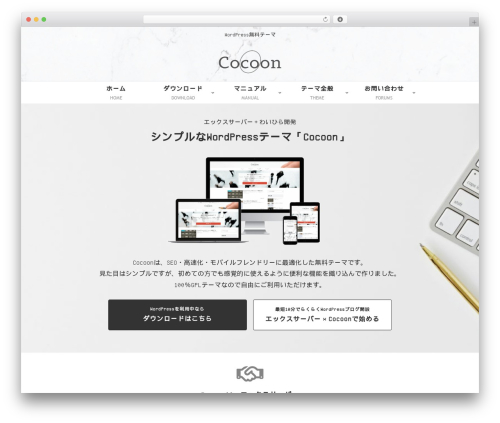
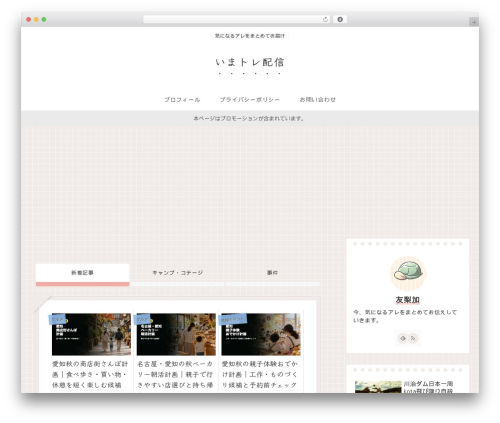
Cocoon is a free WordPress theme built by a Japanese developer known as yhira, and it has held a steady spot among the fifty most used themes we track since 2018. Search for it in English and you'll notice something odd: almost everything about it, from the settings panel to the sites running it, is in Japanese. It's less a general-purpose theme and more a purpose-built engine for Japan's blogging and product-review culture.
Not on WordPress.org, but not a fly-by-night project
You won't find Cocoon in the official WordPress.org theme directory. It's distributed from yhira's own site instead, which is common among Japanese theme developers and isn't a red flag by itself — it just means updates and support happen outside the channel most WordPress users are used to. The theme counts as long-established, and its usage has held steady rather than climbing or fading, which points to a loyal base rather than a passing trend.
Who actually runs it
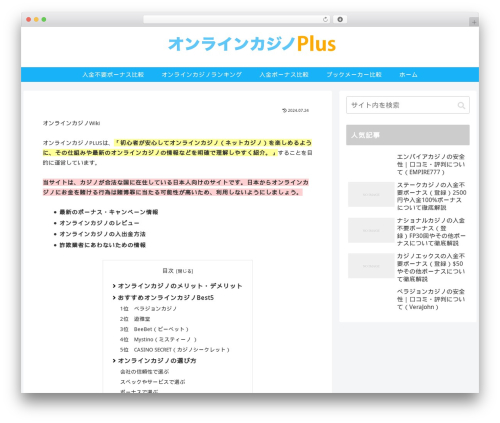
Personal and hobby blogs make up the largest share of sites we find running Cocoon, well ahead of any other category. After that come school and education sites, medical and dental practices, photography portfolios, and small hotels and restaurants — the kind of setup where one person runs the whole site and wants a theme that writes content well without fuss. Business-type data backs this up: services and personal sites dominate, with corporate and ecommerce use trailing far behind. The language split is even starker: the overwhelming majority of sites running Cocoon are in Japanese. If your audience or your workflow isn't Japanese, you're an edge case here, not the target.
How it's actually built
Cocoon skips page-builder plugins entirely. It works through its own settings panel layered over standard WordPress editing, with SEO fields — meta descriptions, schema toggles, related-post logic — built into the theme rather than left to a plugin, which lines up with the author's own pitch around search-friendliness. There's also no sprawling family of child themes to pick from, unlike ecosystems built around Genesis or Woodmart; you get one theme, deeply configured, not a dozen skins.
What it's actually good at
Cocoon's core stays light, and the plugin mix we find alongside it reflects that: Contact Form 7 for basic forms, Google Site Kit for analytics, and — a telling one — the Japanese affiliate-review plugin yyi-rinker shows up often enough to confirm a real cluster of product-comparison blogs running on it. That's a theme doing its job well: staying out of the way while a content plugin carries the weight. For a solo blogger who wants fast pages without wrestling with a builder, that's a genuine strength.
Where it gets in the way
Skipping a builder cuts both ways — you're not fighting one, but you're also stuck inside Cocoon's own layout logic rather than free design. Documentation and support threads run almost entirely in Japanese, so troubleshooting is harder if you don't read the language. And distribution outside WordPress.org means you're relying on one developer's own update cadence rather than the familiar review process — workable, but worth knowing before you put a business site on it.
If you want something else
For a general-purpose theme with a bigger template and plugin ecosystem, Woodmart or Bridge cover more ground, especially for stores or agency-style portfolios. Blocksy is the closer philosophical match — light, fast, block-editor-first — but with an English-first community and full WordPress.org distribution. yhira's earlier themes, Simplicity2 and Simplicity1.9.3, show where Cocoon came from — smaller in use now, effectively superseded by it.
Before you decide
Is Cocoon free?
Yes. It's free to download and use, though it isn't listed in the official WordPress.org directory — you get it directly from the developer's own site.
Does Cocoon use a page builder like Elementor or Divi?
No. It relies on its own settings panel and standard WordPress editing rather than a drag-and-drop builder, which keeps pages lighter but limits layout freedom compared to Woodmart or Bridge.
How does Cocoon compare to Blocksy?
Both are light, block-editor-friendly themes, but Blocksy has an English-first community and official WordPress.org distribution, while Cocoon is built around Japanese blogging and SEO conventions and distributed independently.
Where that leaves you
If you're running or planning a Japanese-language blog, review site, or small local business — a clinic, a school, a guesthouse — and want fast, SEO-tooled pages without touching a builder, Cocoon is a sound, proven pick. If you're building in English, need ecommerce depth, or want the design freedom a builder gives you, look elsewhere; this theme simply wasn't built with you in mind.
Last updated 2026-11-05