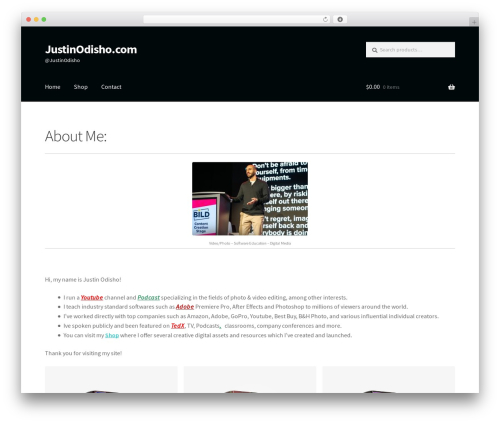
Storefront is the WooCommerce team's own theme, built by the people who maintain the plugin it's designed around. It's been a fixture in the WordPress ecommerce space since we started tracking it, and it remains one of the fifty most used themes we track — not because it's flashy, but because it's the default answer to 'what theme goes under WooCommerce.'
What it actually is
Strip away the marketing copy and Storefront is a deliberately plain base theme, shipped by Automattic to sit under WooCommerce without fighting it. The author calls it 'the perfect theme for your next WooCommerce project,' which is the kind of line every theme page has — the more useful fact is that it's built and maintained by the same team that ships the plugin, so compatibility isn't an afterthought here the way it is for most themes.
How it's actually used, once installed
Looking at the plugins installed alongside it, the pattern is unambiguous: WooCommerce is present on nearly every site running it, which confirms this is a single-purpose theme, not a general-market one wearing a store skin. Beyond that, Yoast SEO and Contact Form 7 show up often, which is unremarkable — every serious site runs something like them. More telling is Elementor's presence on a meaningful slice of installs: Storefront's own layout is minimal, so a lot of site owners bring in a page builder to handle the homepage and landing pages it doesn't try to design for them. The Storefront Powerpack extension also turns up regularly, which is where Automattic's actual commercial layer sits — the base theme is a loss leader for its own add-ons.
Who ends up running it
Unsurprisingly, ecommerce dominates the business-type breakdown by a wide margin, with services and corporate sites trailing behind — those are likely stores with a blog or brochure pages bolted on. On the niche side, the signal is mild rather than dominant: books and media, food and beverage, and photography/creative sites appear somewhat more than others, but plenty of home goods, education, and fashion stores run it too. This is a theme picked by category, not by industry — if you're selling physical or digital products, you're the target regardless of what you sell.
What it gets right
The tight integration is real, not just copy. Product grids, cart widgets, checkout flow — they render the way WooCommerce expects, without the template-override hacks that plague general-purpose themes forced into ecommerce duty. It's also lean by default, which matters: a store theme that ships bloated CSS and JS on every product page is fighting your conversion rate before a customer even scrolls. And the child-theme ecosystem around it is unusually healthy, so if you want to customize without touching core files, that path is well-trodden.
What else is on the shortlist
Automattic itself offers alternatives worth a look if Storefront's plainness bores you: Seedlet is a lighter, more design-forward block theme from the same company, and Sela and Varia are newer full-site-editing themes with more visual identity out of the box. None of them have Storefront's WooCommerce pedigree, though. If you just want a stable, no-frills WordPress base and don't care about ecommerce at all, core themes like Twenty Fifteen or Twenty Twenty-Three show up near it in usage rank, but they're general blogging themes, not real substitutes for a store.
Where it starts to hurt
The design is dated and everyone building on it knows it. That's exactly why so many installs pair it with Elementor — the theme won't stop you from building a decent-looking homepage, but it also won't help you. If you want a store that looks distinctive out of the box, you'll spend time and probably money (the Powerpack) getting there. It's also not evolving toward full-site editing at the pace of newer Automattic themes, so if block-based design matters to you long-term, this isn't where the company's attention is going. Usage has been holding steady rather than growing, which tracks with a theme that's mature, reliable, and not particularly exciting anyone anymore.
Before you install it
Is Storefront free?
The base theme costs nothing to download and use. Where Automattic makes money is the extensions layer — the Storefront Powerpack and other WooCommerce add-ons that a large share of live installs end up running alongside it.
Does it use a page builder?
No, it doesn't ship one. It's built on the classic WordPress customizer, which is why so many installs bring in Elementor separately to design pages the theme itself leaves plain.
Is it good for a non-ecommerce site?
Not really the point of it. Everything about its layout and widget areas assumes a product catalog and cart. If you're not selling anything, a general-purpose theme like Twenty Twenty-Three will serve you better.
Who should actually install this
If you're setting up a WooCommerce store and want a theme that won't fight the plugin, argue with checkout templates, or require constant patching after WooCommerce updates, Storefront remains a sound, low-risk default — especially if you're comfortable adding Elementor or a child theme to give it a personality. If you want something that looks good the moment you activate it, or you're not building a store at all, look elsewhere; this theme was never trying to win on looks, and it shows.
Last updated 2026-11-04