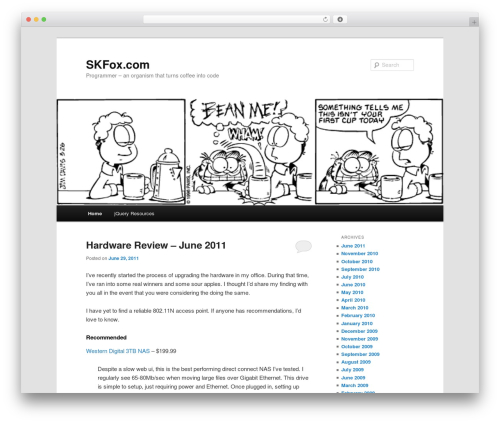
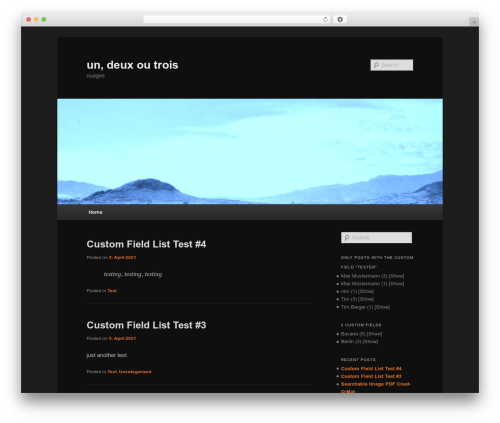
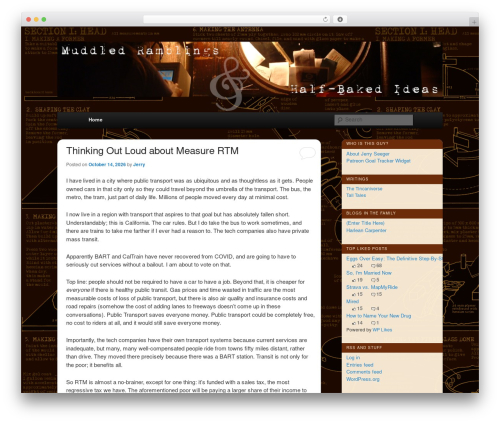
Twenty Eleven was the default theme WordPress shipped with in 2011, built by the core team as a clean, widget-heavy showcase theme. It's a relic by design standards, yet our detection data still counts it among the fifty most used themes we track, holding its position with no sign of collapsing. That alone tells you something: this isn't a theme people are discovering, it's one people never got around to replacing.
A default theme nobody actively sells anymore
Twenty Eleven came bundled with WordPress core in the 2011 release cycle. It isn't a plugin-store product with a marketing funnel behind it — the author is simply "the WordPress team," and the description on file reads like release notes: a Showcase page template, custom menus, header and background support, three layout choices. Our records don't show it currently listed as a free download in the main WordPress.org theme directory, which matters: most sites running it today installed it years ago, when it still shipped by default, rather than choosing it fresh this year.
Widgets and a theme options panel, not a builder
There's no drag-and-drop builder here. Twenty Eleven works the old way: a theme customizer for color scheme (light or dark) and link colors, a Showcase front-page template for pulling forward your best content, and a custom "Ephemera" widget built specifically to display Aside, Link, Quote, and Status post formats in a sidebar or footer. It leans hard on widget areas — a main sidebar plus three footer zones — because in 2011 that was still the standard way to build a homepage. If you want block editor patterns or full-site editing, this theme predates all of that by design, not by accident.
Who's actually still running it
Studying the sites still on Twenty Eleven, the pattern is personal and small-institution, not corporate. Blogs are the single largest niche, followed by schools, churches and community groups, photographers, and media/book sites. By business type, nonprofit and personal sites lead, with services some way behind. Geographically it skews English and German, with smaller but real pockets in French, Japanese, Dutch and Swedish sites — a spread consistent with a theme that was globally bundled rather than regionally marketed. It also has a large family of child themes, which explains why some installs look nothing alike despite sharing the same core.
What it still does well
It's light. There's no builder bloat to strip out, and the plugin pairings back that up: Contact Form 7, Yoast SEO, and Jetpack dominate the list of plugins seen alongside it — functional, unglamorous tools, not page-builder ecosystems or heavy WooCommerce add-ons. That's a sign the sites running Twenty Eleven aren't fighting the theme to get basic features working; they're adding exactly what the theme doesn't do itself, and stopping there. For a static-ish blog, church site, or small school page that just needs to be up and stable, that's the right kind of simplicity.
What you'd pick instead today
The WordPress team's own newer defaults are the obvious upgrade path. Twenty Twenty-Four gives you full-site editing and block patterns Twenty Eleven has no concept of. Twenty Twenty sits closer in spirit — still classic-editor-friendly, still widget-based, but with a decade of design refinement on top. Twenty Seventeen is another default-era stepping stone if you want video headers and a more modern header treatment. Outside the core lineage, Cocoon shows up in similarly sidebar-driven, blog-first setups and is worth a look if you're German- or Japanese-audience adjacent, given its own usage base.
Where it genuinely shows its age
No block editor support, no full-site editing, and no active feature development — this theme is maintained for compatibility, not improvement. Mobile behavior and accessibility patterns reflect 2011 conventions, which is to say: fine, not great, by current expectations. And because it's no longer positioned as a fresh download, getting it installed cleanly on a new site takes more effort than picking something from the current directory. None of that makes it broken. It makes it a theme you inherit, not one you choose.
Before you decide
Is Twenty Eleven still free?
It was released as a free WordPress core default, but it isn't currently offered as a fresh install through the main WordPress.org theme directory. Sites running it today mostly kept it from an older install rather than downloading it new.
Does it use a page builder?
No. It's a classic PHP-template theme with a customizer panel, widget areas, and a Showcase front-page option — no Elementor, no Divi Builder, no block-based full-site editing.
How does it compare to Twenty Twenty-Four?
Twenty Twenty-Four is block-based and built for full-site editing; Twenty Eleven is a widget-and-customizer theme from before that system existed. If you're starting fresh, Twenty Twenty-Four is the more future-proof pick.
Who should actually keep it
If you're running an old blog, church site, school page, or personal site that's already on Twenty Eleven and working fine, there's a real case for leaving it alone — it's light, stable, and the plugin pairings around it stay simple rather than sprawling. If you're starting a new site in any of those categories, though, there's no good reason to choose it fresh: you'd be opting into a design language and a technical model — no blocks, no FSE — that the WordPress team itself moved past over a decade ago. Pick Twenty Twenty or Twenty Twenty-Four instead and get the same simplicity without the ceiling.
Last updated 2026-11-07